Printable SMART Goal Planner for Weekly & Daily Momentum
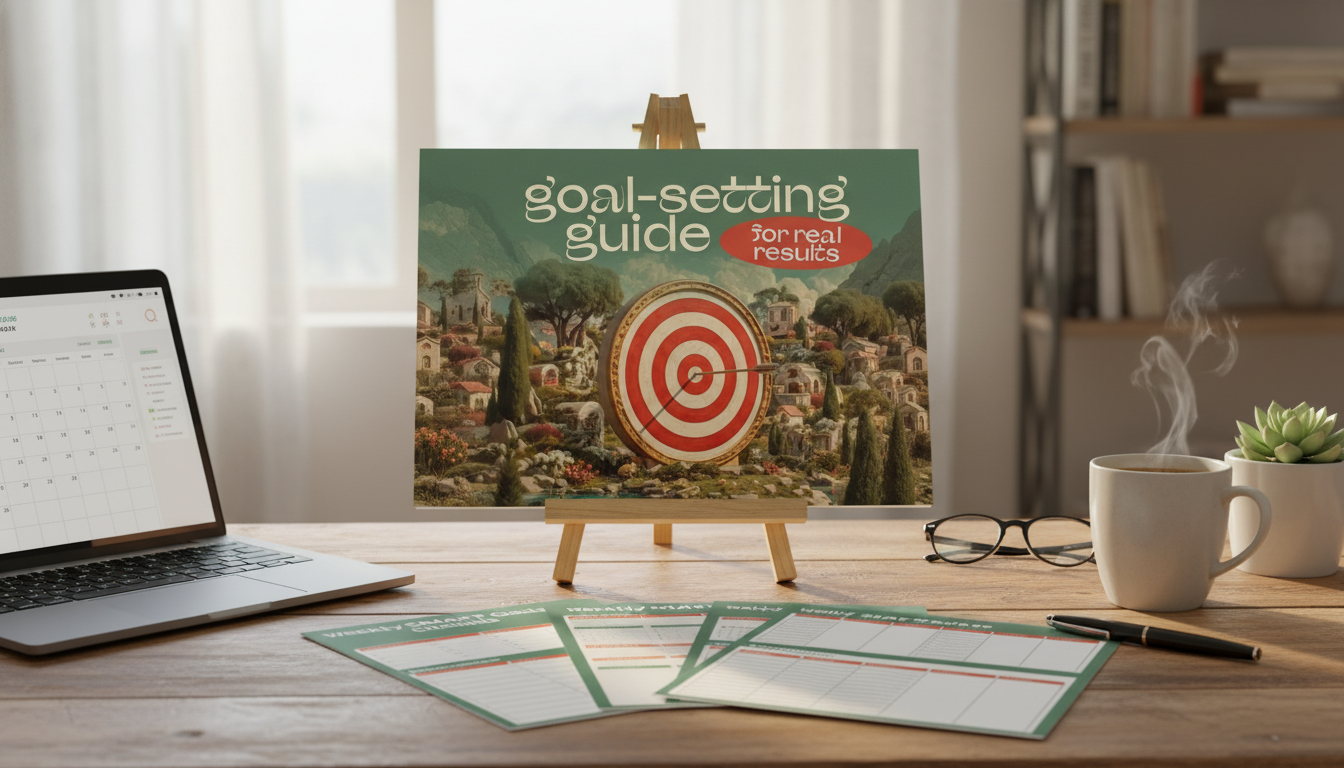
Goal-Setting Guide for Real Results: A Printable Planner System for SMART Goals and Daily Momentum
Clear goals are only half the equation—consistent follow-through is what creates real results. A practical system makes progress visible, keeps daily actions small enough to finish, and builds in reviews so you can adjust before momentum fades. Below is a printable goal-planning approach that turns big ambitions into SMART goals, weekly priorities, and daily actions—without overcomplicating your routine.
What “real results” looks like in a goal plan
A goal plan that actually works is less about motivation and more about clarity, structure, and repeatable check-ins. “Real results” tends to look like:
- A defined outcome with a measurable finish line: You can tell when it’s done, not just “better.”
- A timeline that creates urgency without panic: A target date plus smaller checkpoints.
- A short weekly priority list: Priorities connect directly to the goal (not a long wish list).
- Daily actions that still fit busy days: Steps small enough to complete even when energy is low.
- A review rhythm: Weekly and monthly reviews surface what’s working and what needs adjustment.
- Simple tracking: If it’s annoying, it won’t be maintained—keep it lightweight.
For a research-backed foundation, goal-setting theory emphasizes that specific and challenging goals paired with feedback improve performance over vague intentions (see Locke & Latham’s Goal-Setting Theory overview).
Turn a big goal into a SMART goal that can be scheduled
Big goals often fail at the scheduling stage. SMART goals fix that by converting a desire into something you can calendar and track.
- Start with the outcome: Define what “done” means in one sentence.
- Make it measurable: Track numbers, milestones, or clear completion criteria.
- Check achievability: Confirm available time, budget, skills, and support.
- Confirm relevance: Tie the goal to a reason that holds up under stress.
- Set time boundaries: Add a target date and interim checkpoints.
SMART goal quick build (example template)
| SMART element | Fill-in prompt | Example |
|---|---|---|
| Specific | What exactly will be completed? | Finish a 12-week strength program |
| Measurable | How will progress be tracked? | Complete 3 workouts/week and log them |
| Achievable | What resources/time are available? | 45 minutes per session, Mon/Wed/Fri |
| Relevant | Why does this matter now? | Increase energy and reduce back discomfort |
| Time-bound | By when, with checkpoints? | By Nov 30; review every Sunday |
Use a goal planner that connects yearly vision to weekly execution
Planning works best when it flows from big-picture direction down to today’s next step. A printable system can keep all layers connected on purpose:
- Yearly/quarterly view: Choose 1–3 focus areas so effort isn’t diluted.
- Monthly milestones: Define what “meaningful progress” looks like by month-end.
- Weekly plan: Pick 3–5 priority outcomes (results), not a long task list.
- Daily plan: Assign the smallest next actions and place them into realistic time blocks.
- Progress tracking: Mark completions and capture quick notes on obstacles and wins.
If you prefer a ready-to-print structure with guided worksheets and consistent layouts, Goal-Setting Guide for Real Results – Printable Goal Planner, SMART Goals Workbook & Productivity Template for Achievable Success is designed to help you move from goal definition to weekly and daily execution using the same simple pages.
A 15-minute weekly reset that keeps goals on track
Weekly reviews prevent the “busy but stuck” problem. Set a recurring 15-minute block (often Sunday or Monday) and run the same checklist every time:
- Review last week: What moved forward, what stalled, and why?
- Update metrics: Log key numbers or milestone status in one place.
- Choose must-win outcomes: Pick 1–2 outcomes that make the biggest difference.
- List next actions: Convert outcomes into the smallest doable steps.
- Pre-plan friction fixes: Add reminders, prep tools, adjust environment, and set accountability.
One practical addition: use “if-then” planning for predictable obstacles (implementation intentions). For background on why this boosts follow-through, see Gollwitzer’s work on implementation intentions and goal achievement.
Make goals achievable with micro-steps and realistic time budgeting
For habit-building basics that pair well with micro-steps (especially for health goals), the CDC provides a helpful overview of behavior change approaches here: Behavior change and habit formation (CDC).
Common goal-setting traps (and simple fixes)
Printable system: SMART goals workbook + productivity templates
For a complete set of guided worksheets and templates, Goal-Setting Guide for Real Results – Printable Goal Planner, SMART Goals Workbook & Productivity Template for Achievable Success includes the core pages needed to define goals, set milestones, plan weekly priorities, and track daily momentum.
If one of your key goals is academic structure at home, Homework Help Made Easy Toolkit for Parents – Printable Guide for Creating Study Habits, Homework Strategies & Independent Learning pairs well with a weekly planning rhythm by turning school responsibilities into clear routines and manageable next steps.
For goals tied to earnings or long-term financial planning, The Income Multiplier Bundle | 4-in-1 Bundle can support strategy work—then your planner turns that strategy into weekly execution.
Best-fit uses: who this planner system helps most
FAQ
How do SMART goals help with follow-through?
SMART goals remove ambiguity by defining exactly what success looks like and how it will be measured. Time-bound checkpoints add urgency, and a weekly review turns the goal into scheduled actions instead of a vague intention.
How many goals should be active at the same time?
Usually 1–3 primary goals is the sweet spot, supported by a small set of habits that make those goals easier. Fewer active goals improves focus, reduces overwhelm, and increases completion rates.
Is a printable goal planner better than an app?
A printable planner can reduce distractions and keep goals visible on your desk, which helps many people follow through. Apps can be great for reminders; the best option is the format you’ll use consistently week after week.












Leave a comment